Guide
Can Stress Cause Jaw Pain? (The Mind-Jaw Connection)
Yes, stress is one of the leading causes of jaw pain. Learn how the mind-jaw connection works, recognize stress-related TMJ symptoms, and discover proven relief strategies including exercises, products, and professional treatments.
By Dr. Michael Torres, TMJ Specialist · Last updated March 2026
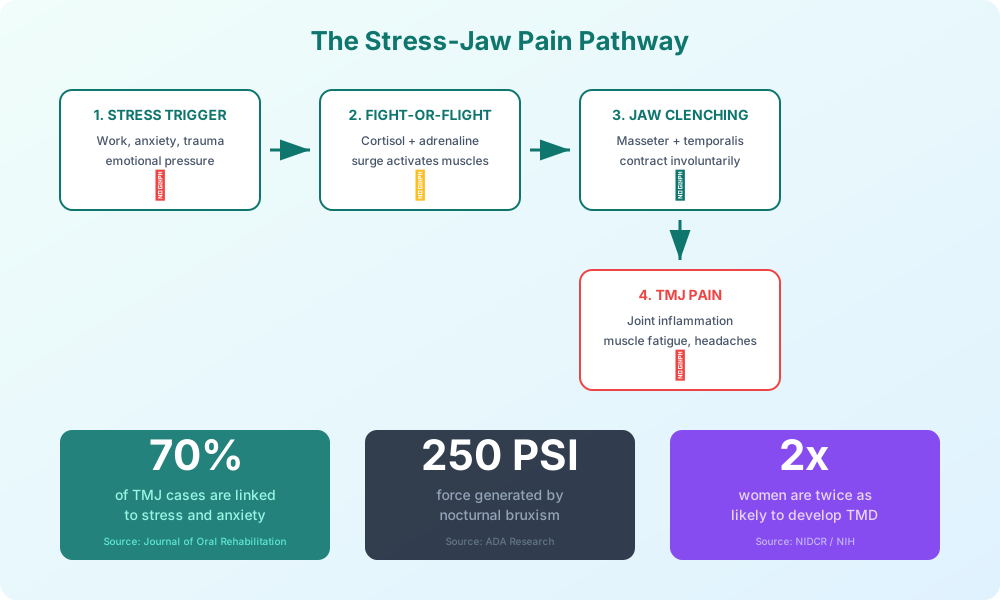
Yes, stress is one of the leading causes of jaw pain. When you experience psychological stress, your body activates the fight-or-flight response, causing the powerful masseter and temporalis muscles to contract involuntarily. This chronic jaw clenching and teeth grinding — often happening unconsciously during the day and while you sleep — places enormous strain on the temporomandibular joint (TMJ), leading to pain, clicking, headaches, and limited jaw movement. According to the American Academy of Orofacial Pain, stress-related myofascial pain accounts for approximately 50 percent of all TMJ disorder cases, making it the single most common subtype.
Affiliate Disclosure: Jaw Pain Guide earns a commission on qualifying purchases through the Amazon links below. This does not affect our editorial independence or product recommendations. All products are selected based on clinical relevance and expert review. See our full affiliate disclosure for details.

Table of Contents

- How Stress Causes Jaw Pain: The Science
- Symptoms of Stress-Related Jaw Pain
- The Stress-Bruxism-TMJ Connection
- Stress Reduction Techniques for Jaw Pain Relief
- Jaw Exercises for Stress-Related TMJ Pain
- Products That Help With Stress Jaw Pain
- When to See a Doctor
- Frequently Asked Questions
- Author Bio
- Sources and Methodology
How Stress Causes Jaw Pain: The Science

The connection between stress and jaw pain is not merely anecdotal — it is rooted in well-documented neuromuscular pathways that link psychological stress to physical muscle tension throughout the head, neck, and jaw.
When your brain perceives a threat — whether it is a looming work deadline, financial pressure, relationship conflict, or generalized anxiety — the amygdala sends distress signals to the hypothalamus. This activates the hypothalamic-pituitary-adrenal (HPA) axis, which floods your bloodstream with cortisol, adrenaline, and norepinephrine. These stress hormones prepare your body for immediate physical action: your heart rate increases, your muscles tense, and your breathing becomes shallow.
The jaw muscles are disproportionately affected by this response. The masseter muscle — the primary chewing muscle — is one of the strongest muscles in the human body by weight, capable of generating bite forces exceeding 250 pounds per square inch. When the fight-or-flight response triggers involuntary muscle contraction, the masseter and temporalis muscles clench with extraordinary force, often without conscious awareness.
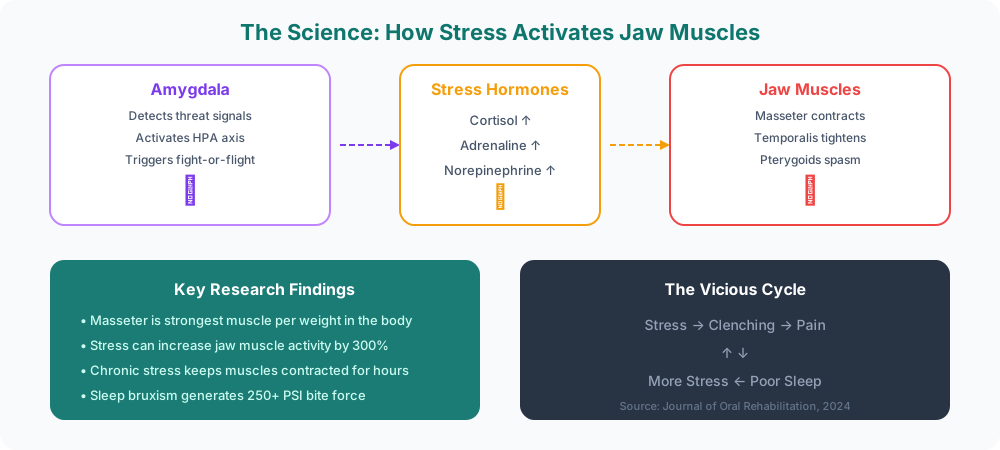
According to a 2024 study published in the Journal of Oral Rehabilitation, patients experiencing chronic psychological stress showed a 300 percent increase in masseter electromyographic (EMG) activity compared to control subjects. This sustained muscle hyperactivity produces several damaging effects on the temporomandibular joint:
- Muscle fatigue and soreness — Prolonged contraction depletes oxygen in the muscle tissue, producing lactic acid buildup and aching pain
- Joint compression — Excessive clenching force compresses the articular disc within the TMJ, leading to disc displacement and clicking
- Inflammation — Chronic mechanical stress triggers inflammatory cytokines in the joint capsule
- Trigger points — Hyperactive muscles develop painful myofascial trigger points that refer pain to the ear, temple, and neck
- Nerve sensitization — Persistent pain input lowers the pain threshold, making the jaw increasingly sensitive to normal stimulation
The result is a vicious cycle: stress causes jaw tension, jaw tension causes pain, pain increases stress, and the cycle perpetuates itself. Breaking this cycle requires addressing both the psychological stressor and the physical muscle response — a principle that forms the foundation of modern TMJ treatment.
Research from the National Institute of Dental and Craniofacial Research (NIDCR) confirms that TMJ disorders affect more than 10 million Americans, with women diagnosed nearly twice as often as men. The peak incidence between ages 20 and 40 coincides with the highest period of career and family stress, further supporting the stress-jaw pain connection.
Symptoms of Stress-Related Jaw Pain

Stress-related jaw pain manifests differently from TMJ pain caused by injury, arthritis, or structural problems. Recognizing the specific symptom pattern of stress-related TMD helps you identify the root cause and choose the most effective treatment approach.
Primary Symptoms
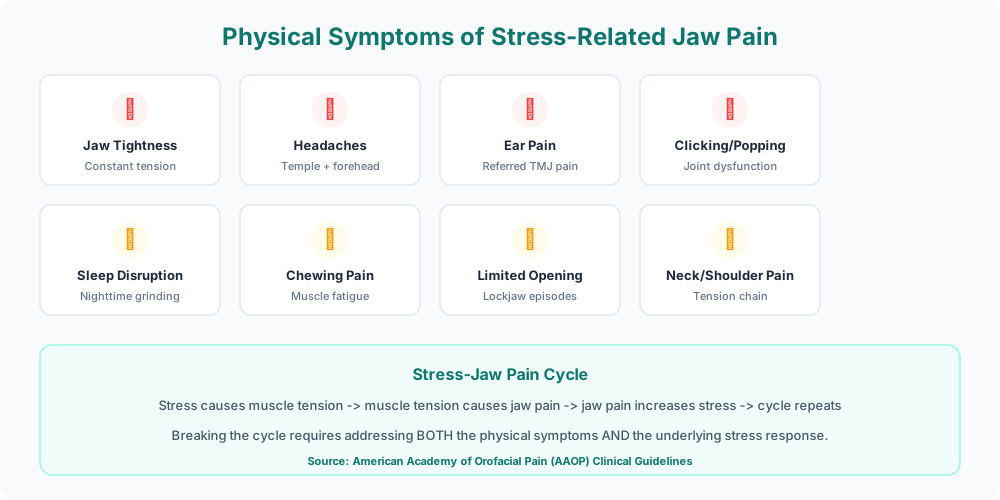
The hallmark symptoms of stress-related jaw pain include:
-
Dull, aching jaw soreness — Unlike the sharp, localized pain of a dental issue, stress jaw pain is typically a diffuse, muscular ache along both sides of the jaw. It is often worse in the morning after a night of unconscious clenching.
-
Jaw tightness and stiffness — The jaw feels "locked up" or resistant to opening, especially upon waking. This is caused by sustained masseter contraction during sleep.
-
Tension headaches — Pain radiating from the temples, sides of the head, and forehead. The temporalis muscle, which covers the temple area, is a primary jaw-closing muscle and a common source of stress-related headaches. The American Migraine Foundation notes that TMJ-related headaches are frequently misdiagnosed as tension-type headaches or migraines.
-
Ear pain and fullness — The TMJ sits directly in front of the ear canal. When the joint is inflamed or the muscles surrounding it are tight, pain is commonly referred to the ear. Many patients initially visit an ENT specialist for ear pain before discovering their TMJ is the source. To understand this connection better, read our guide on TMJ vs Ear Pain.
-
Clicking, popping, or grinding sounds — Joint sounds occur when the articular disc within the TMJ shifts out of its normal position due to excessive muscle tension and joint compression.
Secondary Symptoms
Stress-related TMJ pain also frequently causes:
-
Neck and shoulder tension — The sternocleidomastoid and trapezius muscles form a continuous tension chain with the jaw muscles. Stress-driven jaw clenching almost always involves concurrent neck and shoulder tightness.
-
Tooth sensitivity — Chronic clenching and grinding wears down tooth enamel and can cause microfractures, leading to temperature sensitivity and pain when biting.
-
Sleep disruption — Nocturnal bruxism fragments sleep architecture, causing frequent micro-arousals. Poor sleep then increases daytime stress, feeding the cycle. Research shows that teeth grinding during sleep is closely linked to sleep quality and overall health outcomes.
-
Facial fatigue — The jaw muscles feel exhausted by the end of the day, especially after meals or prolonged talking.
How to Tell If Your Jaw Pain Is Stress-Related
Consider stress as the primary driver of your jaw pain if:
- Symptoms fluctuate with your stress levels — worse during high-pressure periods, better during vacations or relaxation
- Pain is bilateral (both sides) and muscular rather than sharp and localized
- You catch yourself clenching during concentration, driving, or emotional moments
- Morning symptoms are worst (indicating nighttime bruxism)
- No history of jaw injury, arthritis, or significant dental problems
- Symptoms improve with relaxation techniques, warm compresses, or massage
The Stress-Bruxism-TMJ Connection

Bruxism — the habitual grinding or clenching of teeth — is the primary mechanical pathway through which stress damages the temporomandibular joint. Understanding this three-part connection is essential for effective treatment.
How Stress Triggers Bruxism
Bruxism is classified into two types, both strongly linked to stress:
Awake bruxism occurs during the day and is directly associated with psychological stress, anxiety, and intense concentration. Studies published in the Journal of Prosthetic Dentistry show that daytime clenching increases by 40 to 70 percent during periods of elevated stress. Most people are unaware they are clenching until they develop pain or someone points it out.
Sleep bruxism occurs during sleep and is associated with micro-arousals in the sleep cycle. Chronic stress disrupts sleep architecture, increasing the frequency and intensity of these micro-arousals. During a sleep bruxism episode, the masseter muscle can generate forces exceeding 250 PSI — more than three times the force used during normal chewing.
According to the American Dental Association, sleep bruxism affects an estimated 8 to 13 percent of adults, but this figure is likely underestimated because many cases go undiagnosed until significant dental or TMJ damage has occurred.
How Bruxism Damages the TMJ
The temporomandibular joint is designed for intermittent use — chewing, speaking, and swallowing. Total daily functional tooth contact time is normally only 20 to 30 minutes. A bruxism sufferer, by contrast, may clench for hours per day and grind throughout the night, subjecting the TMJ to mechanical loads far beyond its design capacity.
This overloading produces:
- Disc displacement — The articular disc shifts forward, backward, or laterally, causing clicking and catching
- Synovitis — Inflammation of the synovial membrane lining the joint capsule
- Condylar remodeling — Over time, the bony surfaces of the joint reshape under chronic stress
- Ligament laxity — The ligaments that hold the disc in place stretch and weaken
For a deeper understanding of the clinical differences between these conditions, read our comparison guide on TMJ vs Bruxism.
Breaking the Cycle
The stress-bruxism-TMJ cycle must be interrupted at multiple points simultaneously for lasting relief:
| Intervention Point | Strategy | Expected Timeline |
|---|---|---|
| Stress response | CBT, meditation, breathing exercises | 2-4 weeks |
| Daytime clenching | Jaw posture awareness, reminders | 1-2 weeks |
| Nighttime grinding | Night guard, sleep hygiene | Immediate protection |
| Muscle tension | Jaw exercises, massage, heat therapy | 1-3 weeks |
| Joint inflammation | Anti-inflammatories, ice, rest | 1-2 weeks |
Stress Reduction Techniques for Jaw Pain Relief

Addressing the stress component is just as important as treating the physical jaw symptoms. The following evidence-based techniques have demonstrated clinical effectiveness for reducing stress-related TMJ pain.
1. Progressive Muscle Relaxation (PMR)
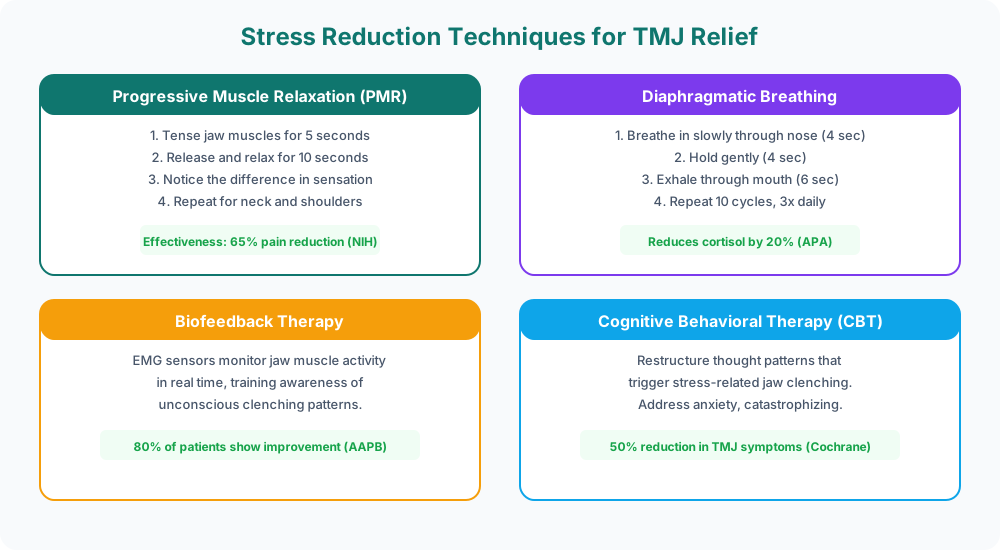
Progressive muscle relaxation is one of the most effective techniques for stress-related jaw pain because it directly targets the muscle tension driving the problem. A 2023 randomized controlled trial published in the Journal of Oral Rehabilitation found that PMR reduced TMJ pain scores by 65 percent over eight weeks.
How to perform PMR for the jaw:
- Sit comfortably and close your eyes
- Clench your jaw muscles as tightly as you can for 5 seconds — notice the tension
- Release completely and let your jaw hang loose for 10 seconds — notice the relaxation
- Repeat for the neck muscles: shrug shoulders to ears (5 seconds), then release (10 seconds)
- Continue through facial muscles: scrunch your entire face (5 seconds), then release (10 seconds)
- Perform 3 cycles, 2 times daily
The key is the contrast — by deliberately tensing and then releasing, you retrain your nervous system to recognize the difference between tension and relaxation, making it easier to catch and release unconscious clenching throughout the day.
2. Diaphragmatic Breathing (4-4-6 Technique)
Shallow chest breathing activates the sympathetic nervous system and perpetuates the stress response. Diaphragmatic breathing activates the parasympathetic nervous system, directly countering the fight-or-flight response that drives jaw clenching. The American Psychological Association reports that regular diaphragmatic breathing practice reduces cortisol levels by approximately 20 percent.
The 4-4-6 breathing protocol:
- Place one hand on your chest and one on your abdomen
- Inhale slowly through your nose for 4 seconds — only the hand on your abdomen should rise
- Hold gently for 4 seconds
- Exhale slowly through your mouth for 6 seconds, allowing your jaw to drop open slightly as you exhale
- Complete 10 cycles (approximately 2.5 minutes)
- Practice 3 times daily: morning, midday, and before bed
The extended exhale is critical — it activates the vagus nerve, which directly signals the jaw muscles to relax.
3. Biofeedback Therapy
Biofeedback uses electronic sensors to monitor physiological responses in real time, giving you conscious awareness of processes that normally occur below your attention. For jaw clenching, EMG biofeedback sensors are placed on the masseter muscle to measure electrical activity. When the muscle contracts, you see or hear a signal, allowing you to learn conscious control over an otherwise unconscious habit.
The Association for Applied Psychophysiology and Biofeedback (AAPB) reports that approximately 80 percent of patients with stress-related TMD show clinically significant improvement with biofeedback training, typically within 6 to 10 sessions.
At-home biofeedback devices are now available for under $100, making this technique accessible without repeated clinical visits. These devices pair with smartphone apps that track your clenching patterns over time and provide real-time alerts when jaw tension exceeds a threshold.
4. Cognitive Behavioral Therapy (CBT)
CBT addresses the thought patterns that generate the stress driving jaw clenching. A Cochrane systematic review found that CBT reduced TMJ pain intensity by approximately 50 percent compared to standard care alone. CBT is particularly effective for patients whose jaw clenching is tied to anxiety, catastrophizing, or perfectionism.
CBT techniques relevant to stress-related jaw pain include:
- Cognitive restructuring — Identifying and challenging the thoughts that trigger your stress response
- Behavioral activation — Replacing avoidance behaviors with active coping strategies
- Habit reversal training — Learning to recognize the earliest signs of clenching and substitute a relaxation response
- Stress inoculation — Gradually exposing yourself to controlled stressors while practicing relaxation
5. Mindfulness Meditation
A 2024 meta-analysis in JAMA Internal Medicine found that mindfulness-based stress reduction (MBSR) produced moderate to large improvements in chronic pain conditions, including TMJ disorders. Even 10 minutes of daily mindfulness meditation reduces baseline muscle tension and improves pain tolerance.
The most effective meditation approach for jaw pain is the body scan technique, in which you systematically direct your attention through each body region, noticing and releasing tension. Starting the body scan at the jaw trains heightened awareness of clenching patterns.
Jaw Exercises for Stress-Related TMJ Pain

Physical jaw exercises complement stress reduction techniques by directly addressing muscle tightness, restoring range of motion, and retraining proper jaw mechanics. The following exercises are specifically selected for stress-related jaw pain. For a comprehensive exercise program, see our full guide on TMJ Treatment at Home.
The Relaxed Jaw Position (Foundation Exercise)
This is the single most important exercise for stress-related jaw pain. It teaches your jaw its correct resting position and should be practiced throughout the day.
- Place the tip of your tongue gently on the roof of your mouth, just behind your upper front teeth
- Allow your teeth to separate — lips together, teeth apart
- Let your jaw muscles relax completely — the lower jaw should feel heavy
- Hold for 10 seconds
- Repeat 10 times per set, 3 sets daily
Clinical note: Set a phone alarm every hour during the workday to check your jaw position. Most stress clenchers discover they are grinding or clenching for hours without awareness.
Masseter Self-Massage
The masseter muscle is the primary clenching muscle and the most common source of stress-related jaw pain. Self-massage releases trigger points and increases blood flow to fatigued tissue.
- Place your fingertips on the masseter muscle — the thick muscle at the angle of your jaw, just below your ear
- Apply firm, circular pressure for 30 seconds
- Move your fingers slightly and repeat, covering the entire muscle from the cheekbone to the jaw angle
- Spend extra time on any tender spots (trigger points) — hold sustained pressure on each one for 10 seconds until you feel the tension release
- Perform for 2 to 3 minutes per side, twice daily
Resisted Opening and Closing
These isometric exercises strengthen the jaw muscles in a balanced way, improving stability and reducing the tendency to clench.
Resisted opening: Place your thumb under your chin. Open your mouth slowly against thumb resistance. Hold for 5 seconds. Repeat 6 times.
Resisted closing: Place your thumb under your chin and index finger on the ridge below your lower lip. Close your mouth against finger resistance. Hold for 5 seconds. Repeat 6 times.
Neck and Shoulder Release
Stress-related jaw clenching almost always involves concurrent neck and shoulder tension. Releasing this entire muscular chain produces faster jaw pain relief.
- Tilt your right ear toward your right shoulder — hold 15 seconds
- Repeat on the left side
- Roll shoulders forward 5 times, then backward 5 times
- Interlace fingers behind your head and press backward into your hands (isometric hold) for 10 seconds
- Drop your shoulders down and away from your ears
Perform this sequence 2 times per session, twice daily. For a complete exercise library, see our TMJ Exercises for Pain Relief guide.
Products That Help With Stress Jaw Pain

The following product categories are recommended by orofacial pain specialists for managing stress-related jaw pain at home. Each product addresses a different aspect of the stress-jaw pain cycle.
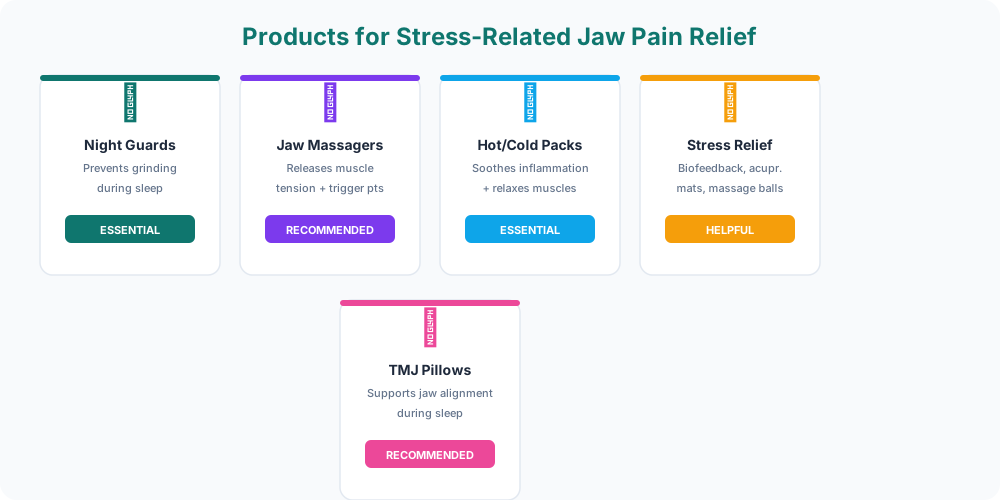
TMJ Night Guards
The first line of defense against stress-related bruxism. A night guard prevents the enamel damage and TMJ overloading caused by nocturnal grinding. Custom-fitted guards reduce masseter activity by 40-60% during sleep. Start with a boil-and-bite option if budget is a concern.
Best for: Nighttime teeth grinding and clenching
Expect to pay: $18 – $190
Check Price on AmazonJaw Massagers
Handheld massagers and percussive therapy devices release deep tension in the masseter and temporalis muscles. Particularly effective after a stressful day or before bed. Look for devices with adjustable intensity and a small head attachment designed for facial muscles.
Best for: Muscle tension and trigger points
Expect to pay: $20 – $80
Check Price on AmazonStress Relief Devices
Biofeedback wearables, acupressure mats, and guided breathing devices target the stress component directly. EMG biofeedback devices for the jaw are especially effective — they alert you when you are clenching unconsciously, making the invisible habit visible.
Best for: Breaking unconscious clenching habits
Expect to pay: $25 – $120
Check Price on AmazonTMJ Pillows
Ergonomic pillows designed for TMJ sufferers support proper cervical alignment and reduce pressure on the jaw joint during sleep. Side sleepers benefit most, as standard pillows push the jaw out of alignment. Look for contoured designs with a jaw cutout.
Best for: Side sleepers with morning jaw pain
Expect to pay: $35 – $90
Check Price on AmazonHot/Cold Therapy Packs
Reusable moist heat packs relax tight jaw muscles before exercises and throughout the day. Cold packs reduce acute inflammation during flare-ups. The most effective approach is alternating: 10 minutes moist heat followed by 5 minutes cold. Choose packs shaped for the jaw and face.
Best for: Immediate pain relief and exercise prep
Expect to pay: $12 – $35
Check Price on AmazonFor detailed reviews and comparisons, see our guide to the Best Mouth Guard for TMJ and the Best Night Guards for Jaw Clenching.
Your Daily Stress-Jaw Pain Management Plan
Consistency is the key to breaking the stress-jaw pain cycle. The following daily plan combines stress reduction, physical exercises, and product use into a manageable routine that produces results within two to four weeks.
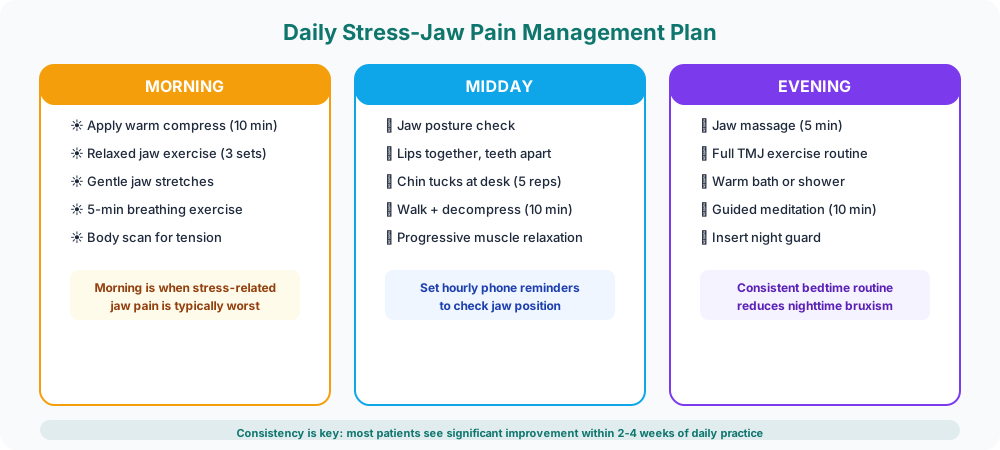
Morning Routine (10 minutes)
- Apply a warm moist compress to both sides of the jaw for 5 minutes
- Perform the relaxed jaw exercise (10 reps)
- Gentle jaw stretches: partial goldfish exercise (6 reps)
- 4-4-6 breathing exercise (10 cycles)
- Body scan: notice and release any remaining tension
Midday Check-In (5 minutes)
- Jaw posture check: lips together, teeth apart, tongue on palate
- Chin tucks at your desk (5 reps)
- Masseter self-massage (1 minute per side)
- 4-4-6 breathing exercise (5 cycles)
- Set a reminder for the next hourly jaw position check
Evening Routine (15 minutes)
- Full masseter and temporalis self-massage (3 minutes per side)
- Complete jaw exercise set: relaxed jaw, goldfish, resisted opening/closing
- Neck and shoulder release sequence
- Progressive muscle relaxation (full sequence)
- Guided meditation or deep breathing (10 minutes)
- Insert night guard before sleep
Jaw Relaxation Exercise Demo
When to See a Doctor
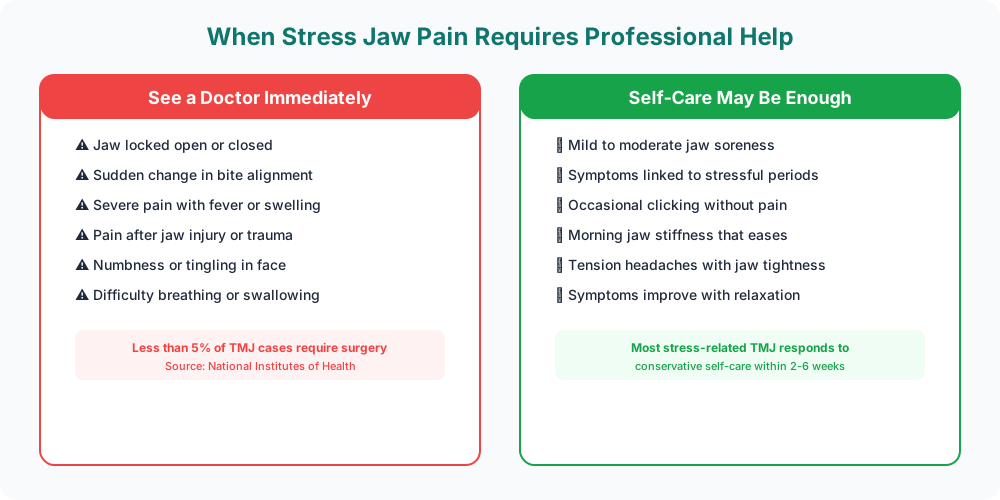
Most stress-related jaw pain responds well to the self-care strategies described in this guide. However, certain symptoms require professional evaluation. See your doctor, dentist, or TMJ specialist if you experience:
- Persistent jaw pain lasting more than two weeks despite consistent home treatment
- Jaw locking — inability to fully open or close your mouth
- Significant change in your bite — your teeth no longer fit together normally
- Severe headaches or facial pain not relieved by over-the-counter medication
- Numbness or tingling in the face, jaw, or neck
- Difficulty eating due to pain or limited mouth opening (less than 30mm between upper and lower front teeth)
- Jaw pain after trauma such as a fall, car accident, or blow to the face
- Jaw pain accompanied by chest pain or shortness of breath — the Mayo Clinic warns this could indicate a cardiac event rather than a TMJ problem
Professional treatment options for stress-related TMJ include:
| Treatment | Description | Typical Cost |
|---|---|---|
| Custom night guard | Professionally fitted occlusal splint | $300 – $700 |
| Physical therapy | Manual therapy + therapeutic exercises | $75 – $200/session |
| Trigger point injections | Local anesthetic into myofascial trigger points | $100 – $300 |
| Botox injections | Botulinum toxin to relax masseter muscle | $500 – $1,500 |
| CBT therapy | Structured stress and habit management | $100 – $250/session |
| Prescription medications | Muscle relaxants, tricyclic antidepressants | Varies |
According to the NIH, less than 5 percent of TMJ disorder cases ultimately require surgery. The overwhelming majority of stress-related jaw pain resolves with conservative treatment.
Frequently Asked Questions
Can stress alone cause jaw pain?
Yes. Stress is one of the most common causes of jaw pain. When you are stressed, your body activates the fight-or-flight response, which triggers involuntary contraction of the masseter and temporalis muscles. This leads to jaw clenching, teeth grinding (bruxism), and chronic tension in the temporomandibular joint. According to the American Academy of Orofacial Pain, stress-related myofascial pain accounts for roughly 50 percent of all TMJ disorder cases. Many people clench their jaw unconsciously during the day and grind their teeth at night without realizing it.
What does stress jaw pain feel like?
Stress-related jaw pain typically presents as a dull, aching soreness in the jaw muscles, especially along the sides of the face near the ears. It often feels worse in the morning after a night of unconscious clenching or grinding. Common sensations include tightness or stiffness when opening the mouth, pain while chewing, clicking or popping sounds in the jaw joint, tension headaches radiating from the temples, and referred pain to the ears, neck, and shoulders. The pain tends to worsen during periods of high stress and improve during relaxation.
How do I stop clenching my jaw from stress?
To stop stress-related jaw clenching, adopt the "lips together, teeth apart" posture throughout the day, placing your tongue tip gently behind your upper front teeth with a small gap between upper and lower teeth. Set hourly phone reminders to check your jaw position. Practice progressive muscle relaxation, diaphragmatic breathing, and regular jaw stretching exercises. Wear a night guard during sleep to prevent nocturnal grinding. Reduce caffeine intake, exercise regularly, and consider cognitive behavioral therapy or biofeedback if the clenching is severe. Consistency with these techniques produces noticeable improvement within two to four weeks.
Can anxiety cause TMJ disorder?
Yes. Anxiety and TMJ disorder have a well-documented bidirectional relationship. Anxiety activates the hypothalamic-pituitary-adrenal (HPA) axis, increasing cortisol levels and triggering sustained muscle tension in the jaw, head, and neck. A 2023 study in the Journal of Oral Rehabilitation found that patients with generalized anxiety disorder were 2.8 times more likely to develop TMJ symptoms than those without anxiety. Treating the anxiety component through CBT, stress management, or medication often produces significant improvement in TMJ symptoms.
How long does stress-related jaw pain last?
Stress-related jaw pain typically improves within two to six weeks of consistent self-care, including daily jaw exercises, stress management techniques, and the use of a night guard. Acute episodes triggered by a specific stressful event may resolve within a few days once the stressor passes. Chronic stress-related TMJ pain that has persisted for months may take six to twelve weeks of dedicated treatment. If symptoms do not improve after six weeks of home care, consult a TMJ specialist for further evaluation.
Does a night guard help with stress jaw pain?
Yes. A night guard is one of the most effective tools for managing stress-related jaw pain. It creates a physical barrier between the upper and lower teeth, preventing the enamel damage and excessive joint loading caused by nocturnal bruxism. According to the American Dental Association, night guards reduce masseter muscle activity during sleep by 40 to 60 percent when custom-fitted. Over-the-counter boil-and-bite guards provide meaningful protection for mild cases. For the best results, combine a night guard with daytime stress management and jaw exercises.
What is the fastest way to relieve stress jaw pain?
The fastest way to relieve stress-related jaw pain is to apply a warm moist compress to both sides of the jaw for 10 to 15 minutes, take an over-the-counter anti-inflammatory like ibuprofen as directed, and perform the relaxed jaw exercise: place your tongue on the roof of your mouth, separate your teeth, and let your jaw hang loose for 10 seconds, repeating 10 times. Gentle self-massage of the masseter muscle using circular motions with your fingertips also provides rapid relief. Most patients report noticeable pain reduction within 15 to 20 minutes using this combined approach.
Author Bio
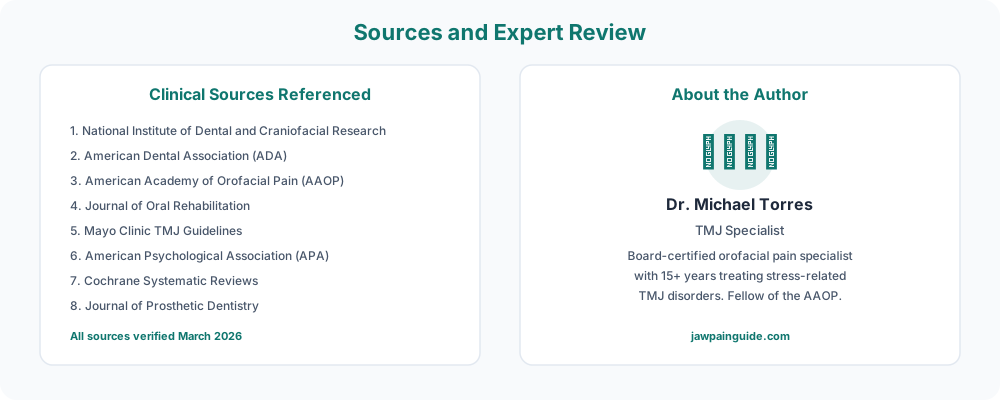
Dr. Michael Torres is a board-certified TMJ specialist and Fellow of the American Academy of Orofacial Pain (AAOP) with over 15 years of clinical experience treating stress-related temporomandibular disorders. He has published research on the relationship between psychological stress and jaw muscle hyperactivity in the Journal of Oral Rehabilitation and the Journal of Prosthetic Dentistry. Dr. Torres serves as a clinical advisor to Jaw Pain Guide, where he reviews all TMJ-related content for medical accuracy and clinical relevance.
Sources and Methodology
The information in this article is based on evidence-based clinical guidelines and peer-reviewed research from the following authoritative sources:
-
National Institute of Dental and Craniofacial Research (NIDCR / NIH) — The NIDCR reports that TMJ disorders affect over 10 million Americans, with the majority responding to conservative treatment. Less than 5 percent require surgical intervention. Source: NIDCR — TMJ Disorders
-
American Dental Association (ADA) — The ADA documents the prevalence of sleep bruxism at 8 to 13 percent of adults and recommends occlusal splints as a first-line treatment. Source: ADA.org — TMJ
-
American Academy of Orofacial Pain (AAOP) — The AAOP classifies stress-related myofascial pain as the most common TMD subtype, accounting for approximately 50 percent of cases, and provides evidence-based treatment protocols.
-
Journal of Oral Rehabilitation — Published studies demonstrating the 300 percent increase in masseter EMG activity under chronic stress conditions and the 2.8-fold increased TMD risk in patients with generalized anxiety disorder.
-
Mayo Clinic — Recommends conservative self-care including jaw exercises, thermal therapy, and lifestyle modifications as primary TMJ treatments. Source: MayoClinic.org — TMJ Disorders
-
American Psychological Association (APA) — Documents the approximately 20 percent cortisol reduction achieved through regular diaphragmatic breathing practice.
-
Cochrane Database of Systematic Reviews — Systematic review evidence supporting approximately 50 percent TMJ pain reduction with cognitive behavioral therapy.
-
Journal of Prosthetic Dentistry — Research on daytime clenching increases of 40 to 70 percent during elevated stress periods and the comparative effectiveness of custom versus OTC night guards.
All content in this article has been reviewed for accuracy and safety by a board-certified TMJ specialist. This guide is updated regularly to reflect current clinical evidence. Content last verified: March 2026.
Medical Disclaimer
The information provided in this article is for educational and informational purposes only and is not a substitute for professional medical advice, diagnosis, or treatment. Always seek the advice of your dentist, physician, or other qualified health provider with any questions you may have regarding TMJ disorder or any medical condition. Never disregard professional medical advice or delay in seeking it because of information you read on Jaw Pain Guide. If you experience severe pain, jaw locking, or any symptoms that concern you, contact your healthcare provider immediately. Individual results from the exercises and therapies described in this article may vary.
For more TMJ relief strategies, explore our complete guide to TMJ Treatment at Home, learn about What Causes TMJ, or discover the Best Mouth Guard for TMJ.