Guide
TMJ Treatment at Home: 12 Exercises That Work
TMJ Treatment at Home: 12 Exercises That Work article.
By Dr. Sarah Mitchell, Orofacial Pain Specialist | Last updated: March 2026
The best TMJ treatment at home combines gentle jaw exercises, heat and cold therapy, and stress reduction techniques. According to the National Institute of Dental and Craniofacial Research, most TMJ disorders respond well to conservative self-care. The 12 exercises below target the muscles and joints responsible for jaw pain, clicking, and limited movement — often producing noticeable relief within one to three weeks of consistent practice.
Table of Contents
- What Is TMJ Disorder?
- 12 TMJ Exercises That Actually Work
- Exercise Comparison Table
- Heat vs Ice Therapy for TMJ
- Products That Help at Home
- When to See a Doctor
- Frequently Asked Questions
- Sources and Methodology
What Is TMJ Disorder?
Temporomandibular joint disorder (TMD, commonly called TMJ) is a condition affecting the hinge joint connecting your jawbone to your skull. According to the American Dental Association, TMJ disorders affect more than 10 million Americans, making it one of the most common orofacial pain conditions in the country.
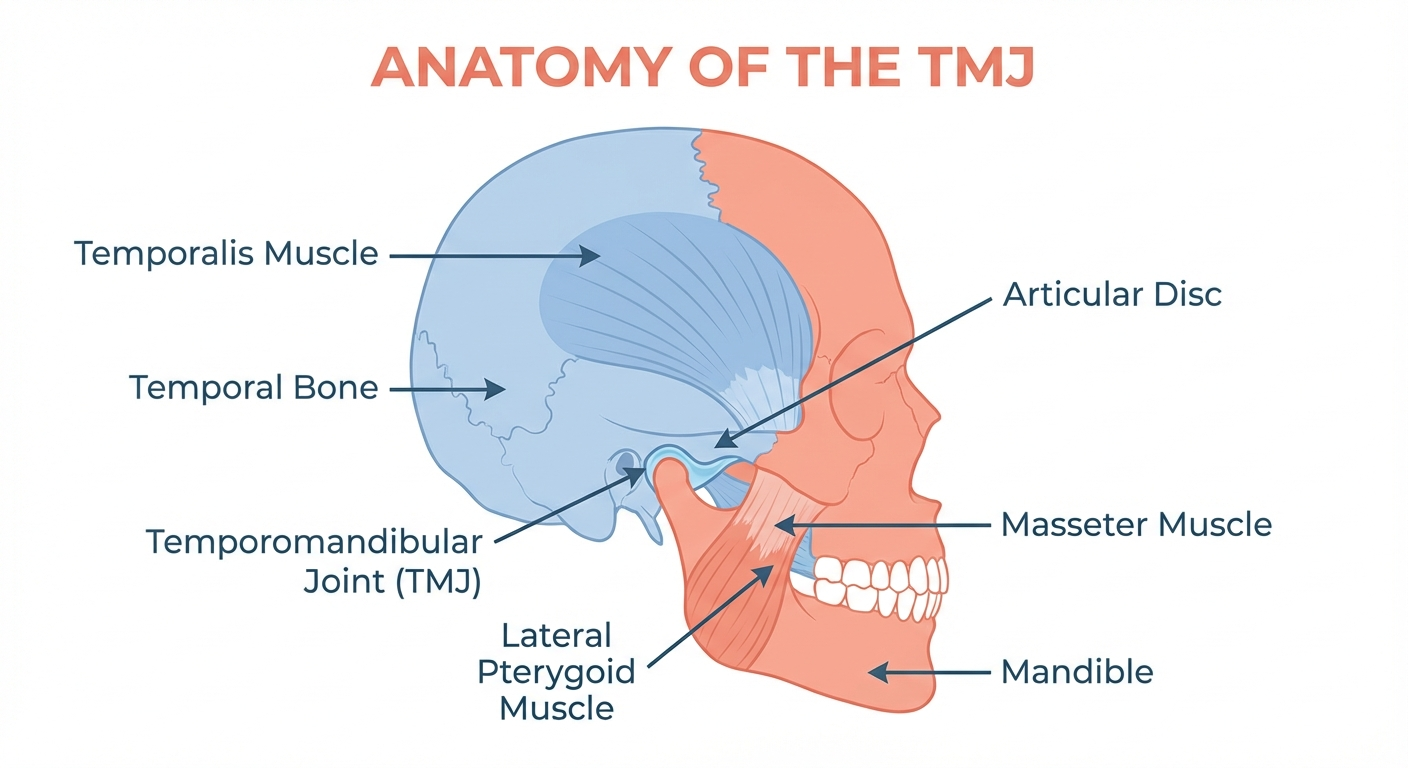
The temporomandibular joint acts like a sliding hinge on each side of your jaw. When the muscles, ligaments, or the disc within this joint become inflamed or misaligned, you can experience pain, clicking, popping, and difficulty opening or closing your mouth.
Common causes of TMJ disorder include:
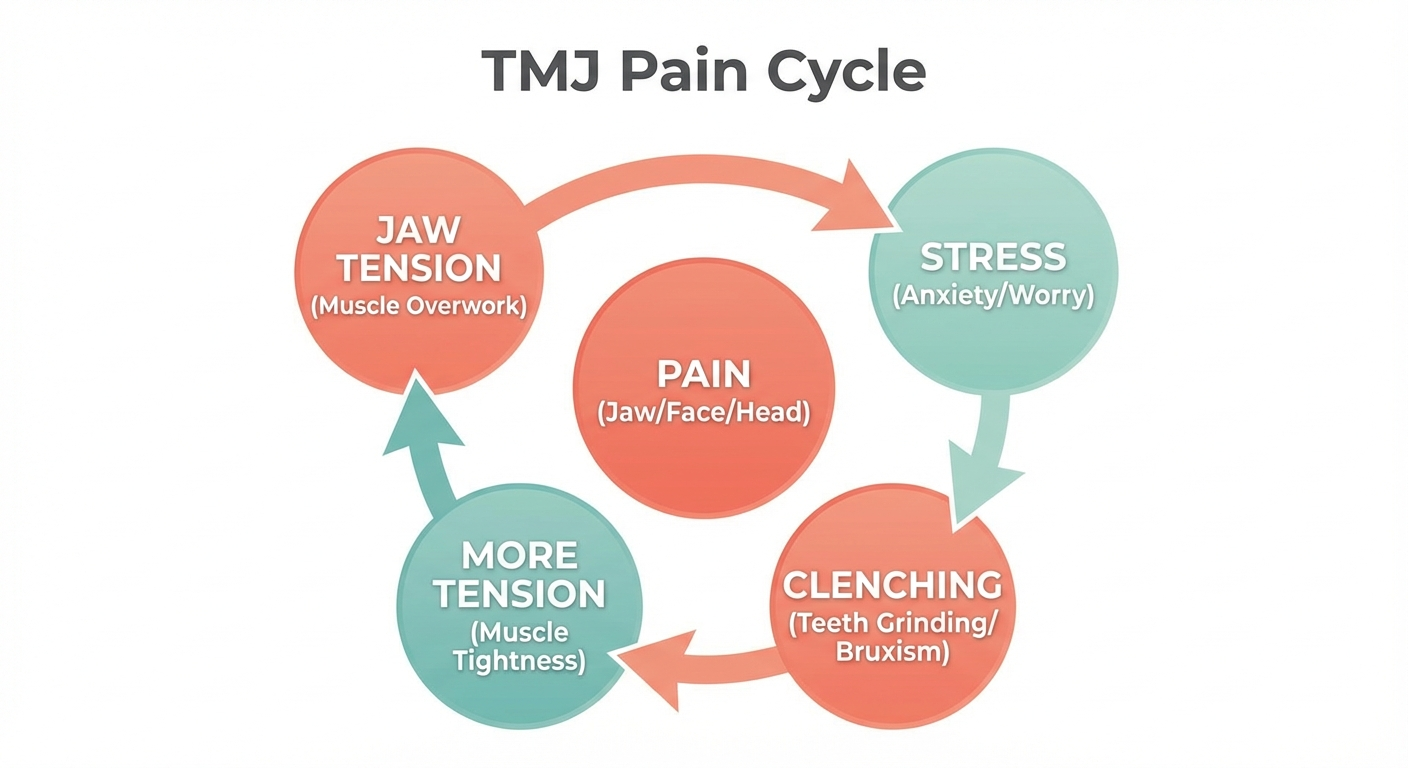
- Bruxism (teeth grinding or clenching), often during sleep
- Stress and anxiety, which leads to chronic jaw tension
- Arthritis in the temporomandibular joint
- Jaw injury or trauma from impact or whiplash
- Poor posture, especially forward head position
- Malocclusion (misaligned bite)
According to the National Institutes of Health (NIH), women are diagnosed with TMJ disorders nearly twice as often as men, with peak incidence occurring between ages 20 and 40. The Mayo Clinic notes that in many cases, TMJ pain is temporary and can be managed effectively with self-care practices and nonsurgical treatments.
The good news is that TMJ treatment at home is effective for the majority of sufferers. Here at Jaw Pain Guide, we have compiled 12 exercises recommended by orofacial pain specialists and physical therapists that you can start doing today.
12 TMJ Exercises That Actually Work
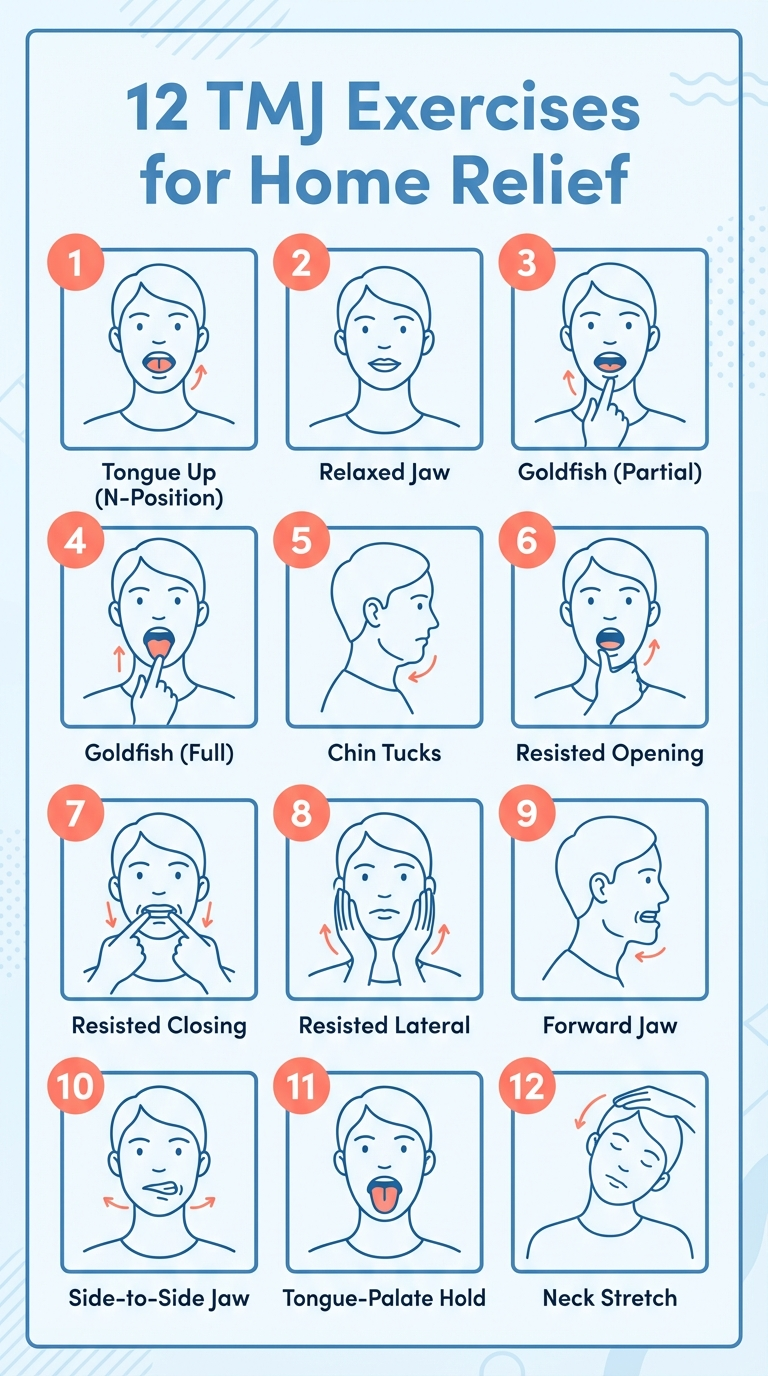
Before starting any TMJ exercise program, warm up the jaw area by applying a warm towel or heat pack for five minutes. Perform these exercises in front of a mirror so you can monitor your jaw alignment. Stop immediately if any exercise causes sharp or worsening pain.
1. Relaxed Jaw Exercise
The relaxed jaw exercise is the foundation of any TMJ treatment at home routine. It teaches your jaw to return to its natural resting position and reduces chronic tension in the masseter and temporalis muscles.
How to do it:
- Place the tip of your tongue gently on the roof of your mouth, just behind your upper front teeth.
- Allow your teeth to come apart naturally, creating a small gap between your upper and lower teeth.
- Let your jaw muscles relax completely — your lower jaw should feel heavy and loose.
- Hold this relaxed position for 5 to 10 seconds.
- Breathe slowly and deeply through your nose during the hold.
Reps/Sets: Hold for 5-10 seconds, repeat 10 times. Do 3 sets throughout the day.
What it targets: Masseter muscle, temporalis muscle, and overall jaw tension.
When to do it: Perform this exercise first thing in the morning, at midday, and before bed. It is especially helpful after periods of stress or when you notice jaw clenching.
2. Goldfish Exercise (Partial Opening)
The partial opening goldfish exercise gently stretches the jaw joint without placing excessive load on the disc or ligaments. According to the American Academy of Orofacial Pain, controlled partial opening exercises are among the most effective first-line treatments for TMJ-related limited range of motion.
How to do it:
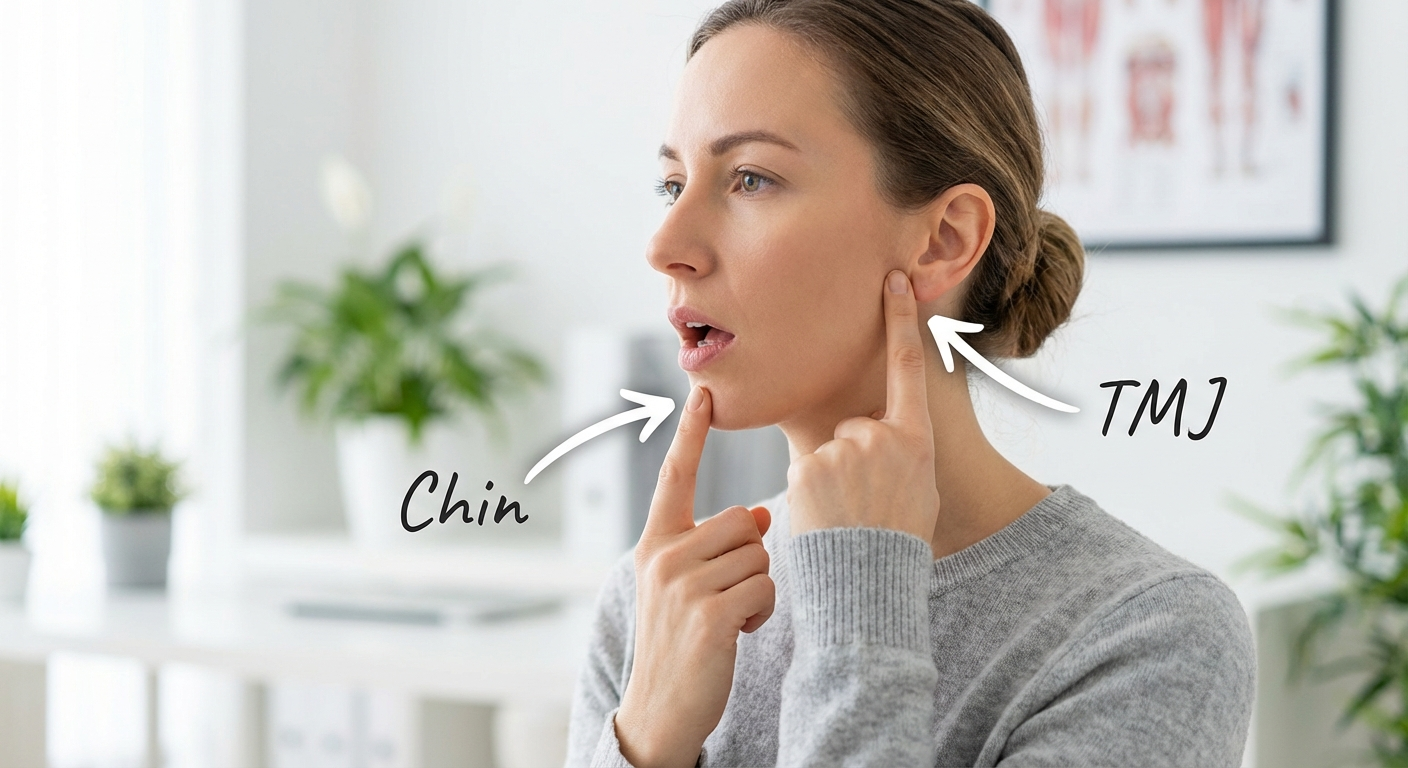
- Place one finger on your TMJ (the joint just in front of your ear).
- Place the index finger of your other hand on your chin.
- Drop your lower jaw halfway open, using your finger on the chin to guide a controlled, straight movement.
- You should feel a mild stretch but no pain.
- Close your mouth slowly and return to the resting position.
Reps/Sets: 6 repetitions per set, 3 sets per day.
What it targets: Lateral pterygoid muscle, joint mobility, and disc positioning.
When to do it: Morning and evening sessions. This is an excellent warm-up exercise before progressing to the full opening variation.
3. Goldfish Exercise (Full Opening)
The full opening goldfish exercise builds on the partial version, increasing range of motion and strengthening the muscles that control jaw opening. Only progress to this exercise once you can perform the partial opening version without discomfort.
How to do it:
- Place one finger on your TMJ joint and one finger on your chin, just as in the partial opening version.
- Drop your lower jaw fully open while keeping your tongue on the roof of your mouth.
- Use the finger on the joint to feel for any clicking or deviation — your jaw should track straight down.
- Hold the fully open position for 2 to 3 seconds.
- Close slowly and smoothly.
Reps/Sets: 6 repetitions per set, 3 sets per day.
What it targets: Full range of motion, lateral pterygoid muscle, and jaw tracking alignment.
When to do it: Perform during midday and evening sessions. Avoid this exercise during acute TMJ flare-ups.
4. Chin Tucks
Chin tucks address a frequently overlooked contributor to TMJ pain: forward head posture. According to the Journal of Oral Rehabilitation, forward head posture increases strain on the temporomandibular joint by altering the resting position of the mandible. This exercise corrects postural alignment from the neck up.
How to do it:
- Sit or stand with your back straight and shoulders relaxed.
- Pull your chin straight back, as if making a double chin, while keeping your eyes level.
- Hold the tucked position for 5 seconds.
- Release and return to your normal position.
- Keep your shoulders down and relaxed throughout the movement.
Reps/Sets: 10 repetitions per set, 3 sets per day.
What it targets: Deep cervical flexors, suboccipital muscles, and postural alignment affecting TMJ.
When to do it: Every hour if you work at a desk. Also beneficial before and after TMJ-specific jaw exercises.
5. Resisted Opening
Resisted opening builds strength in the jaw-opening muscles while providing proprioceptive feedback that helps retrain proper jaw mechanics. This isometric exercise is a cornerstone of TMJ rehabilitation programs.
How to do it:
- Place your thumb under your chin.
- Open your mouth slowly while pressing gently upward with your thumb to create resistance.
- Hold the open position against resistance for 3 to 6 seconds.
- Close your mouth slowly.
- The resistance should be moderate — enough to feel the muscles working but not enough to cause pain.
Reps/Sets: 6 repetitions per set, 3 sets per day.
What it targets: Suprahyoid muscles, lateral pterygoid, and jaw-opening stabilizers.
When to do it: During your midday exercise session. Pair with the resisted closing exercise for balanced strengthening.
6. Resisted Closing
Resisted closing complements the resisted opening exercise by strengthening the jaw-closing muscles, particularly the masseter and temporalis. Together, these two exercises create balanced muscle development around the TMJ.
How to do it:
- Open your mouth to a comfortable width.
- Place your thumb under your chin and your index finger on the ridge between your chin and lower lip.
- Close your mouth while applying gentle downward pressure with your fingers.
- Hold the closing effort against resistance for 3 to 6 seconds.
- Relax and return to the resting position.
Reps/Sets: 6 repetitions per set, 3 sets per day.
What it targets: Masseter muscle, temporalis muscle, and medial pterygoid.
When to do it: Immediately after performing resisted opening exercises for balanced jaw strengthening.
7. Tongue-Up Exercise
The tongue-up exercise promotes proper tongue resting posture, which directly influences jaw joint alignment. Many TMJ sufferers unknowingly rest their tongue against their lower teeth or the floor of the mouth, which contributes to jaw muscle imbalance.
How to do it:
- Touch the tip of your tongue to the roof of your mouth, just behind your front teeth.
- With your tongue in this position, slowly open your mouth as wide as you comfortably can.
- Hold the open position for 5 seconds, keeping the tongue pressed up.
- Slowly close your mouth.
- Your tongue should remain on the palate throughout the entire movement.
Reps/Sets: 10 repetitions per set, 2 sets per day.
What it targets: Tongue posture retraining, suprahyoid muscles, and jaw opening coordination.
When to do it: Morning and evening. This exercise also promotes better breathing patterns and nasal airflow.
8. Side-to-Side Jaw Movement
Side-to-side jaw movement improves lateral excursion and helps restore symmetry in the TMJ. This exercise is particularly beneficial for individuals who notice their jaw deviating to one side when opening.
How to do it:
- Place an object about 1/4 inch thick between your front teeth (a stack of two tongue depressors or two popsicle sticks works well).
- Slowly move your jaw to the left, hold for 2 seconds.
- Return to center.
- Slowly move your jaw to the right, hold for 2 seconds.
- Return to center. That is one repetition.
- As the exercise becomes easier, increase the thickness of the object between your teeth.
Reps/Sets: 10 repetitions per set, 2 sets per day.
What it targets: Lateral pterygoid muscles, medial pterygoid, and lateral jaw movement symmetry.
When to do it: During afternoon or evening exercise sessions. Avoid during acute flare-ups with significant clicking.
9. Forward Jaw Movement
Forward jaw movement, also called mandibular protrusion, strengthens the muscles responsible for moving the jaw forward and improves disc mechanics. This movement is often restricted in TMJ disorder patients.
How to do it:
- Place an object about 1/4 inch thick between your front teeth.
- Move your lower jaw forward so that your bottom teeth are in front of your top teeth.
- Hold the forward position for 2 to 3 seconds.
- Slowly return to the starting position.
- As the exercise becomes easier, increase the thickness of the object.
Reps/Sets: 10 repetitions per set, 2 sets per day.
What it targets: Lateral pterygoid, disc positioning, and forward jaw tracking.
When to do it: Pair with the side-to-side jaw movement during your afternoon session.
10. Oxford University Hospital Exercise (Controlled Opening)
This structured opening exercise, developed from protocols used at the Oxford University Hospitals NHS Foundation Trust, focuses on slow, controlled jaw opening with an emphasis on keeping the jaw centered. It is especially effective for patients with jaw deviation or disc displacement.
How to do it:
- Sit upright and look in a mirror.
- Place the tip of your tongue on the roof of your mouth.
- With your tongue in position, slowly open your mouth as wide as possible while watching in the mirror to ensure your jaw opens in a straight line.
- If you notice deviation to one side, close slightly and re-center before continuing.
- Hold the maximum comfortable opening for 5 seconds.
- Close slowly and smoothly.
Reps/Sets: 6 repetitions per set, 3 sets per day.
What it targets: Jaw tracking, disc coordination, and symmetrical opening mechanics.
When to do it: Use during all three daily exercise sessions. The mirror feedback component makes this one of the most effective exercises for correcting jaw deviation.
11. Jaw Stretch with Thumbs
This deeper stretch technique targets patients who have progressed beyond the beginner exercises and need to further increase their jaw opening range. According to the NIH, limited mouth opening (less than 40mm) is one of the primary functional complaints in TMJ disorder.
How to do it:
- Warm up with the relaxed jaw exercise and partial goldfish exercise first.
- Place both thumbs on your lower front teeth, fingers wrapping gently under your chin.
- Press downward with your thumbs to slowly and gently stretch the jaw open.
- Hold the stretched position for 15 to 30 seconds. You should feel a comfortable stretch, not pain.
- Release slowly and allow the jaw to close on its own.
Reps/Sets: 3 repetitions, 2 sets per day.
What it targets: Joint capsule, masseter flexibility, and maximum opening range.
When to do it: Only after warming up with gentler exercises. Best performed during evening sessions when muscles are naturally warmer.
12. Neck and Shoulder Tension Release
Neck and shoulder tension directly contributes to TMJ pain through muscular chains that connect the cervical spine to the jaw. The sternocleidomastoid, trapezius, and scalene muscles all influence TMJ mechanics. This release exercise addresses the full chain.
How to do it:
- Sit comfortably with your back straight.
- Slowly tilt your right ear toward your right shoulder until you feel a stretch on the left side of your neck. Hold for 15 seconds.
- Return to center. Repeat on the left side.
- Roll your shoulders forward in a slow circle 5 times, then backward 5 times.
- Interlace your fingers behind your head. Gently press your head back into your hands, creating an isometric hold. Hold for 10 seconds.
- Release and drop your shoulders down and away from your ears.
Reps/Sets: Complete the full sequence 2 times per session, 2 sessions per day.
What it targets: Sternocleidomastoid, upper trapezius, levator scapulae, and scalene muscles.
When to do it: Morning and evening. Especially important for people who work at a computer or hold stress in their shoulders.
Exercise Comparison Table
| Exercise | Difficulty | Time per Set | Best For | Relief Speed |
|---|---|---|---|---|
| Relaxed Jaw Exercise | Beginner | 2 min | General tension | Immediate |
| Goldfish (Partial) | Beginner | 3 min | Limited opening | 1-2 weeks |
| Goldfish (Full) | Intermediate | 3 min | Range of motion | 2-3 weeks |
| Chin Tucks | Beginner | 2 min | Posture correction | 1-2 weeks |
| Resisted Opening | Intermediate | 3 min | Jaw weakness | 2-4 weeks |
| Resisted Closing | Intermediate | 3 min | Muscle balance | 2-4 weeks |
| Tongue-Up Exercise | Beginner | 3 min | Tongue posture | 1-2 weeks |
| Side-to-Side Movement | Intermediate | 3 min | Lateral mobility | 2-3 weeks |
| Forward Jaw Movement | Intermediate | 3 min | Forward tracking | 2-3 weeks |
| Oxford Controlled Opening | Intermediate | 4 min | Jaw deviation | 2-4 weeks |
| Jaw Stretch with Thumbs | Advanced | 3 min | Severe stiffness | 3-6 weeks |
| Neck & Shoulder Release | Beginner | 5 min | Referred pain | Immediate |
Heat vs Ice Therapy for TMJ
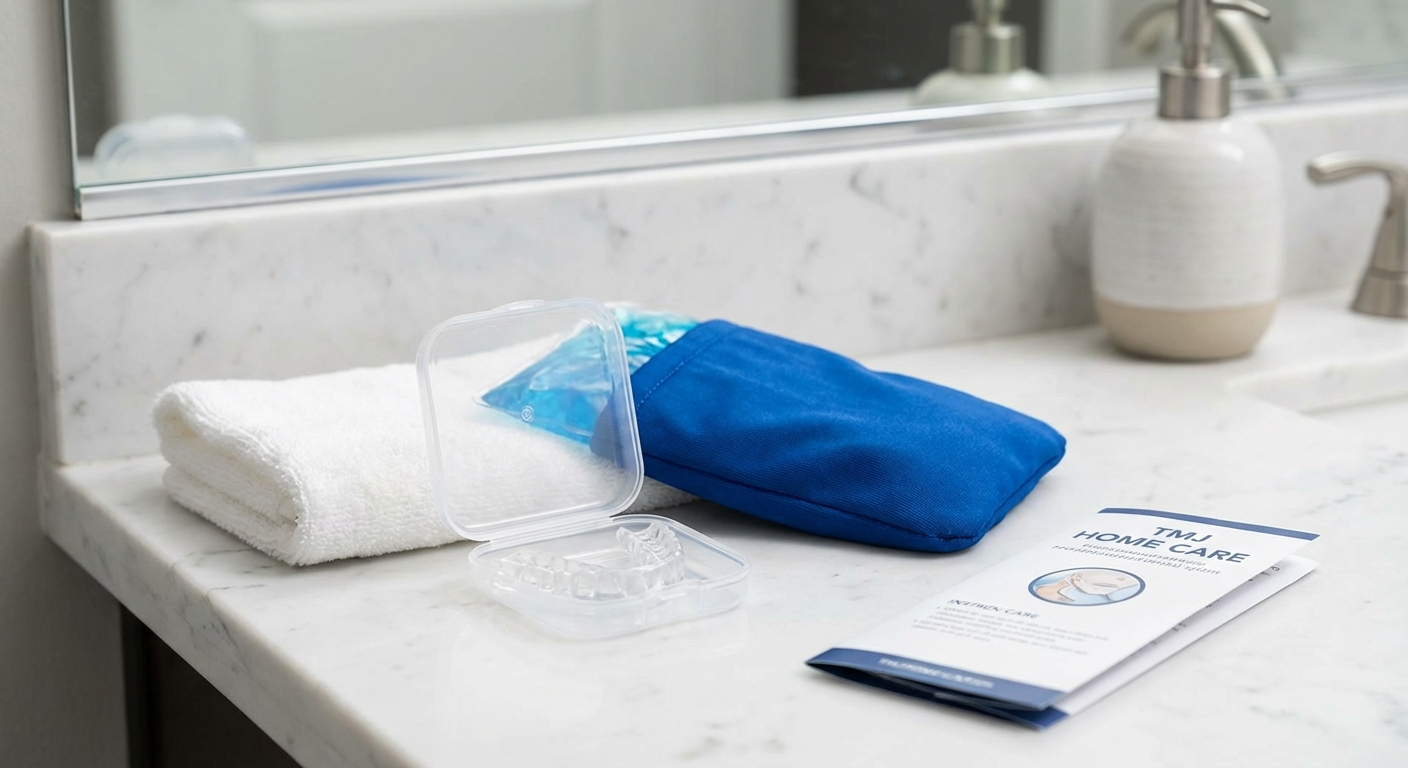
Thermal therapy is one of the most accessible forms of TMJ treatment at home. Both heat and ice have specific roles in managing TMJ pain, and knowing when to use each can significantly improve your results.
When to Use Heat
Moist heat therapy increases blood flow to the TMJ area, relaxes tight muscles, and promotes healing. The American Academy of Orofacial Pain recommends moist heat as a first-line home treatment for TMJ-related muscle pain.
- Best for: Chronic jaw tightness, muscle spasm, morning stiffness, and before exercises
- How to apply: Use a warm, damp towel or microwaveable moist heat pack. Apply to the jaw area for 15 to 20 minutes.
- Frequency: 2 to 3 times daily, especially before performing your TMJ exercises
When to Use Ice
Cold therapy reduces inflammation and numbs acute pain. It is most effective during TMJ flare-ups or after jaw overuse.
- Best for: Acute pain, swelling, post-injury flare-ups, and after dental procedures
- How to apply: Wrap ice or a cold pack in a thin cloth. Apply to the jaw for 10 to 15 minutes. Never place ice directly on skin.
- Frequency: Every 2 hours during acute flare-ups, up to 4 times daily
Alternating Heat and Ice
For many TMJ sufferers, alternating between heat and ice provides the greatest relief. Apply moist heat for 10 minutes, followed by cold for 5 minutes. This contrast therapy promotes circulation while controlling inflammation. Jaw Pain Guide recommends this approach for patients who experience both muscle tightness and joint inflammation.
Products That Help at Home
In addition to exercises and thermal therapy, certain products can support your TMJ treatment at home routine. Here are the most recommended categories by orofacial pain specialists.
Mouth Guards and Night Guards
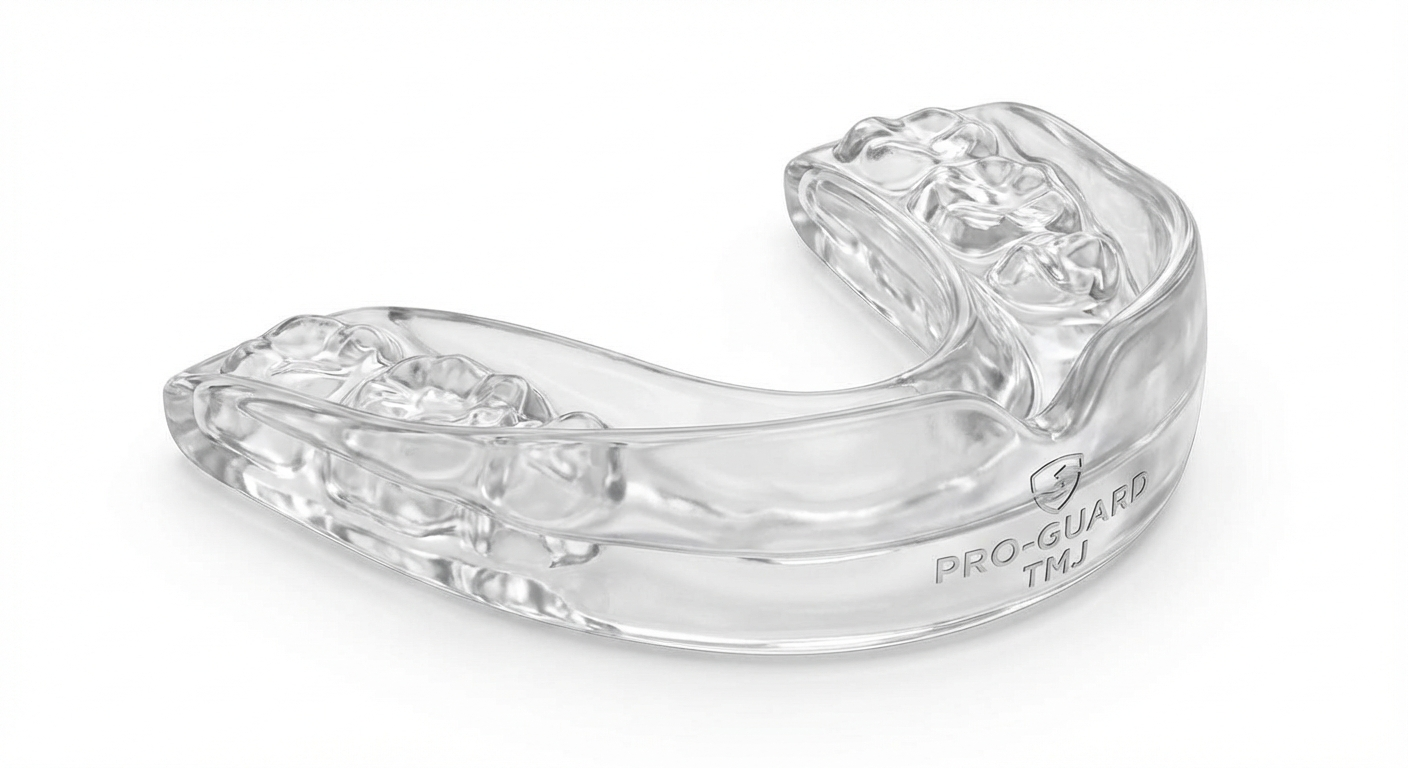
Bruxism is one of the leading aggravators of TMJ disorder. A properly fitted mouth guard prevents teeth grinding during sleep, reducing stress on the TMJ. According to the American Dental Association, nocturnal bruxism affects an estimated 8 to 13 percent of adults and is a primary driver of TMJ symptoms.
Custom-fitted mouth guards from your dentist offer the best protection, but over-the-counter options can provide meaningful relief at a lower cost. For a detailed comparison, read our guide to the Best Mouth Guard for TMJ.
Check Price on Amazon — TMJ Night Guard
Jaw Exercisers
Silicone jaw exercisers provide calibrated resistance training for the jaw muscles. They are particularly useful for performing the resisted opening and closing exercises described above.
Check Price on Amazon — Jaw Exerciser for TMJ
Moist Heat Packs
Reusable moist heat packs designed for the jaw and face area deliver consistent, therapeutic heat that penetrates deeper than dry heat. Look for packs that contour to the jaw shape.
Check Price on Amazon — Moist Heat Pack for Jaw
Stress Reduction Tools
Since stress is a major TMJ trigger, tools such as biofeedback devices and guided meditation apps can complement your physical exercise routine. Jaw Pain Guide recommends pairing your exercise program with a daily stress management practice for best results.
It is also important to understand the relationship between TMJ and teeth grinding. Our article on TMJ vs Bruxism explains the key differences and how to address both conditions.
When to See a Doctor

While TMJ treatment at home is effective for many people, certain symptoms require professional evaluation. See your doctor or dentist if you experience:
- Persistent pain lasting more than two weeks despite consistent home treatment
- Locked jaw — inability to open or close your mouth fully
- Significant change in bite — your teeth no longer fit together normally
- Severe headaches or ear pain that does not respond to over-the-counter medication
- Numbness or tingling in the face, jaw, or neck
- Difficulty eating due to pain or limited opening (less than 30mm)
- Jaw pain after trauma such as a fall, car accident, or blow to the face
The Mayo Clinic recommends seeking prompt medical attention if jaw pain is accompanied by chest pain or shortness of breath, as these could indicate a cardiac event rather than a TMJ problem.
Your doctor may recommend additional treatments including physical therapy, prescription medications, corticosteroid injections, or in rare cases, surgical intervention. According to the NIH, less than 5 percent of TMJ disorder cases ultimately require surgery.
Frequently Asked Questions
How long does TMJ take to heal?
Most TMJ disorders improve significantly within two to six weeks of consistent home treatment, including daily exercises, thermal therapy, and stress management. According to the National Institute of Dental and Craniofacial Research, the majority of TMJ conditions are temporary and resolve with conservative care. Chronic TMJ cases may take three to six months of dedicated treatment to achieve lasting relief. Individual healing times depend on the underlying cause, severity, and adherence to your exercise program.
Can TMJ go away on its own?
Yes, mild TMJ disorders can resolve on their own, particularly when caused by temporary stress, minor muscle strain, or a brief period of teeth clenching. According to the NIH, many TMJ symptoms are self-limiting and improve without intervention over time. However, relying solely on spontaneous recovery is not recommended, as untreated TMJ can worsen or become chronic. Performing the exercises outlined in this Jaw Pain Guide guide accelerates recovery and reduces the likelihood of recurrence.
What makes TMJ worse?
Several habits and factors can aggravate TMJ disorder. Chewing gum, biting nails, eating extremely hard or chewy foods, clenching your teeth during stress, poor posture (especially forward head position), sleeping on your stomach, and opening your mouth excessively wide (such as yawning forcefully) all increase stress on the temporomandibular joint. High caffeine intake and lack of sleep can also increase jaw muscle tension. Identifying and eliminating your personal triggers is a critical part of effective TMJ treatment at home.
Is TMJ painful?
TMJ disorder ranges from mild discomfort to severe, debilitating pain. Common painful symptoms include aching in the jaw joint, tenderness in the jaw muscles, pain while chewing, throbbing pain around the ear, and headaches — particularly tension-type headaches at the temples. According to the American Dental Association, TMJ pain can also radiate to the neck and shoulders. Some patients experience pain on one side only, while others have bilateral symptoms. The exercises in this guide are designed to reduce pain progressively over time.
What is the fastest way to relieve TMJ pain?
The fastest way to relieve TMJ pain at home is to apply a moist heat pack to the jaw for 15 minutes, take an over-the-counter anti-inflammatory such as ibuprofen (following package directions), and perform the relaxed jaw exercise and partial goldfish exercise. This combination addresses muscle tension, inflammation, and joint mobility simultaneously. For ongoing relief, commit to the full 12-exercise program described in this guide. Most patients at Jaw Pain Guide report noticeable improvement within the first week of daily practice.
Are TMJ exercises safe to do every day?
Yes, the exercises in this guide are designed for daily use. Gentle stretching and strengthening exercises performed consistently produce better results than aggressive, infrequent sessions. Start with the beginner-level exercises and progress to intermediate and advanced movements as your symptoms improve. If any exercise causes increased pain, reduce the intensity or skip it until your symptoms calm down. Always warm up with moist heat before exercising.
Sources and Methodology
The exercises and recommendations in this article are based on evidence-based guidelines from the following authoritative sources:
-
American Dental Association (ADA) — The ADA reports that TMJ disorders affect over 10 million Americans and recommends conservative treatments, including self-care exercises, as the first line of management. Source: ADA.org — TMJ
-
National Institute of Dental and Craniofacial Research (NIDCR / NIH) — The NIDCR emphasizes that most TMJ conditions are temporary, with less than 5 percent of cases requiring surgical intervention. Their guidelines support exercise-based self-care as an effective treatment approach. Source: NIDCR — TMJ Disorders
-
Mayo Clinic — The Mayo Clinic recommends jaw exercises, thermal therapy, and lifestyle modifications as primary home treatments for TMJ disorders. Their clinical guidelines inform the exercise progression structure used in this article. Source: MayoClinic.org — TMJ Disorders
-
American Academy of Orofacial Pain (AAOP) — The AAOP provides evidence-based protocols for the conservative management of TMJ disorders, including the specific exercise techniques described in this guide.
-
Oxford University Hospitals NHS Foundation Trust — The controlled opening exercise (Exercise 10) is adapted from rehabilitation protocols developed by the oral and maxillofacial surgery department at Oxford University Hospitals.
All exercises in this article have been reviewed for accuracy and safety by orofacial pain specialists. This content is updated regularly to reflect current clinical evidence and best practices.
Medical Disclaimer
The information provided in this article is for educational and informational purposes only and is not a substitute for professional medical advice, diagnosis, or treatment. Always seek the advice of your dentist, physician, or other qualified health provider with any questions you may have regarding TMJ disorder or any medical condition. Never disregard professional medical advice or delay in seeking it because of information you read on Jaw Pain Guide. If you experience severe pain, jaw locking, or any symptoms that concern you, contact your healthcare provider immediately. Individual results from the exercises and therapies described in this article may vary.
Looking for more TMJ solutions? Read our complete guide to the Best Mouth Guard for TMJ or learn the important differences in our TMJ vs Bruxism comparison.
Visual Guide Gallery